

KALIKA MULTIPLE CAMPUS
Kalika Multiple Campus (KMC), a QAA certified community campus, was established by the collective effort of local academics and social activists in 1990 (2048 B.S.). It is a nonprofit autonomous campus, affiliated to Tribhuvan University (TU). It is a campus with a proud heritage, excellent programs and distinguished faculty. From its establishment, the campus has been preparing students to confront the global challenges.
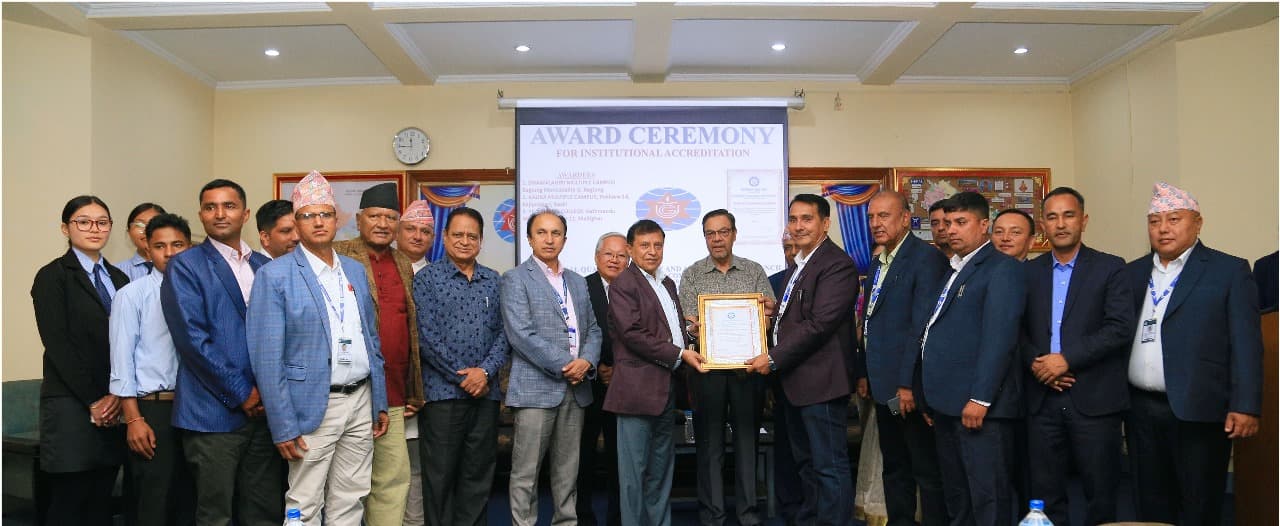
The campus is committed to ensuring quality education with its beautiful environment. Recognized by the University Grants Commission (UGC) of Nepal, KMC has been awarded the “Quality Assurance and Accreditation” certificate. UGC support is one of the main components of the campus development. The campus has been successfully running its academic programs in compliance with the standards of teaching/learning environment specified by TU.
Notably, KMC is the first campus in Gandaki province to offer Master's Degree in Rural Development Studies (MARDS) affiliated to TU. Being at the heart of Pokhara Metropolitan City, KMC has focused to educate the students from rural, remote, and economically and educationally backward societies at a reasonable cost and also providing scholarships, free ships, and fee waiver systems.
Our Campus
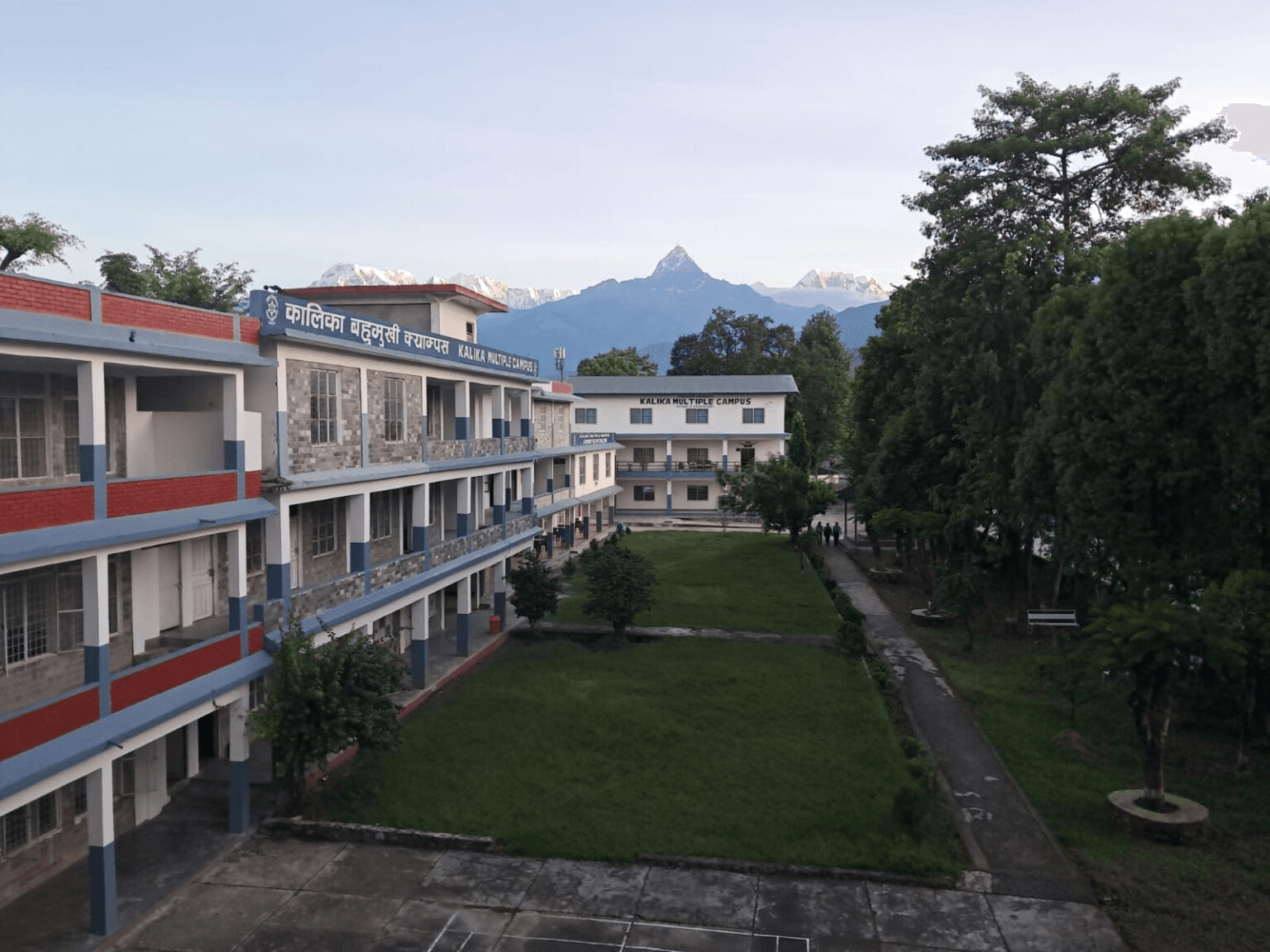
A QAA certified community campus established in 1990, affiliated with Tribhuvan University. KMC is the first campus in Gandaki province to offer Master's Degree in Rural Development Studies and is committed to providing quality education to students from diverse backgrounds.
OUR TEAM
Campus Administration
Loading staff information...
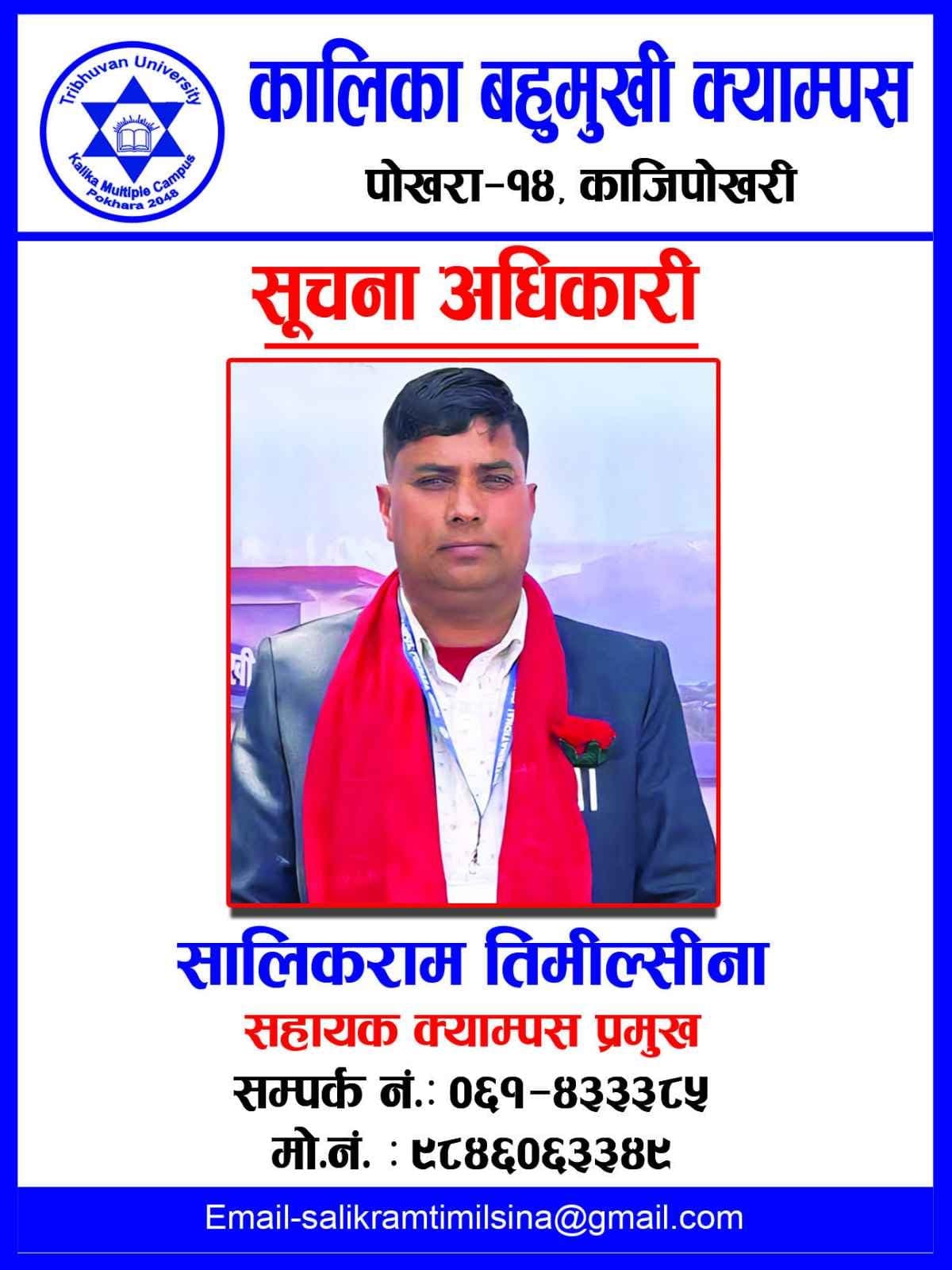
Information Officer
Contact our Information Officer for public inquiries and information requests
ABOUT KMC POKHARA
Excellence in Education Since 1990
Kalika Multiple Campus (KMC) Pokhara is a premier educational institution committed to providing quality education with modern facilities and experienced faculty. We focus on holistic development of students through academic excellence and extracurricular activities.
Quality Education
Modern teaching methodologies
Expert Faculty
Experienced educators
Recognition
Award-winning institution
Modern Facilities
State-of-the-art campus
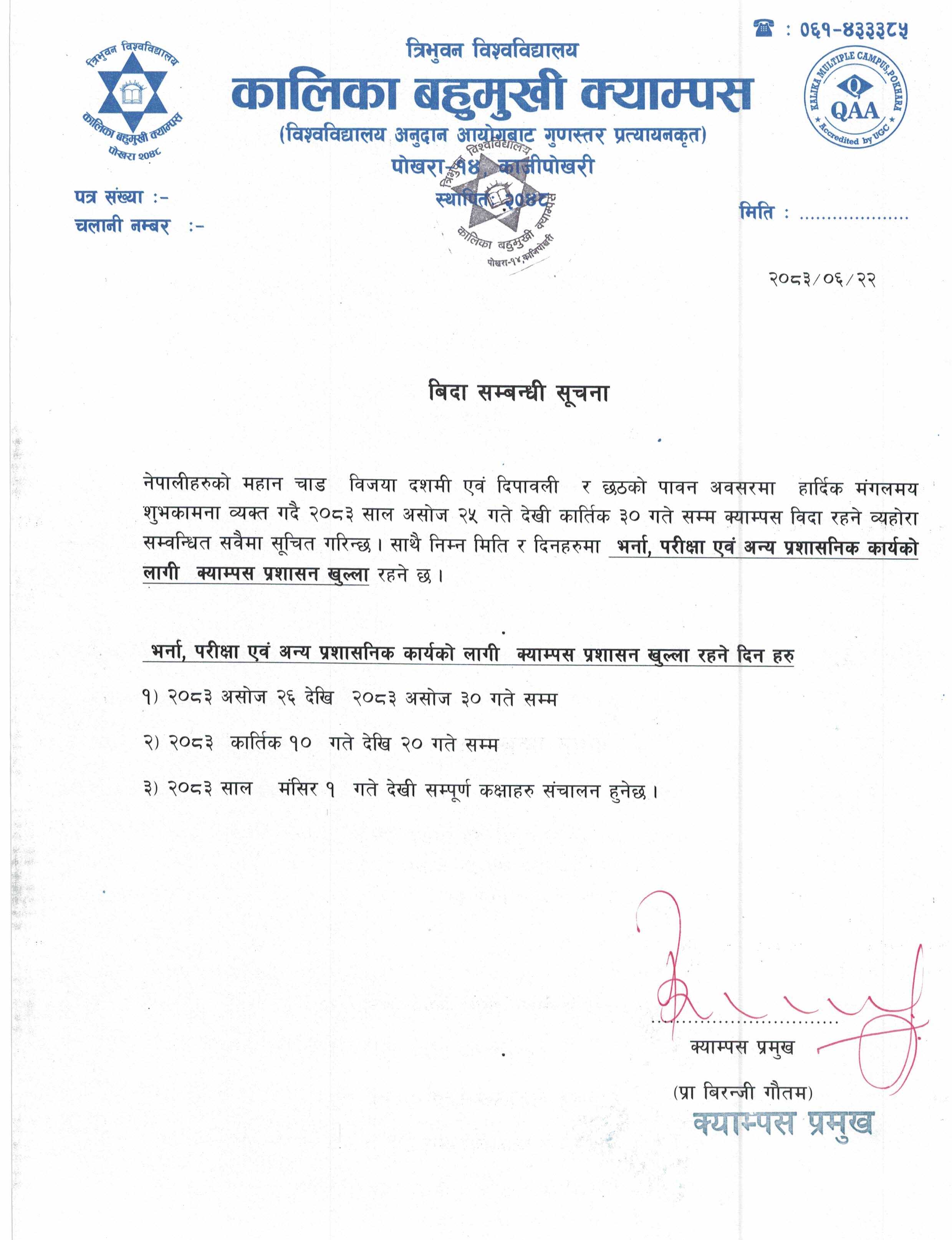
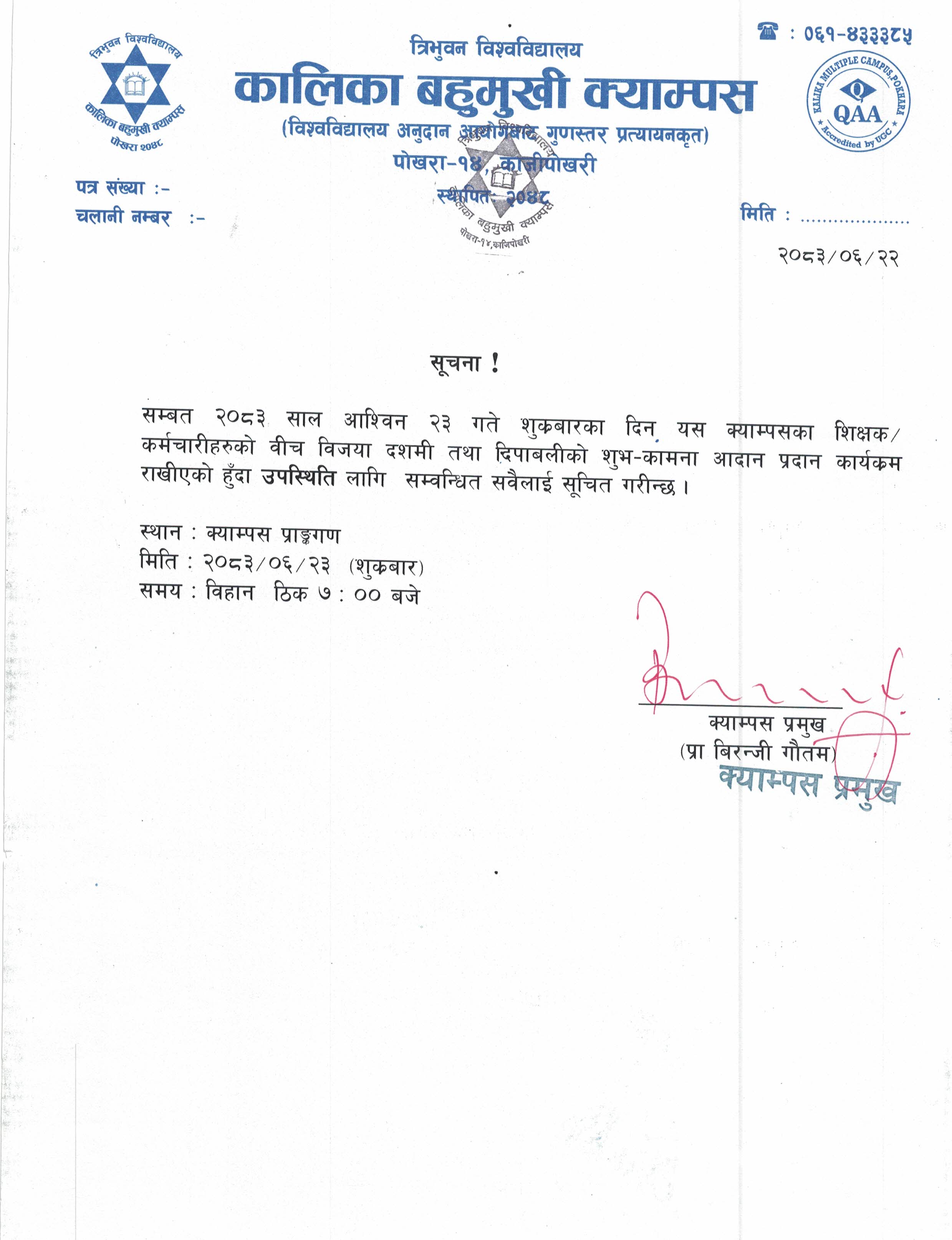
Notices & Events
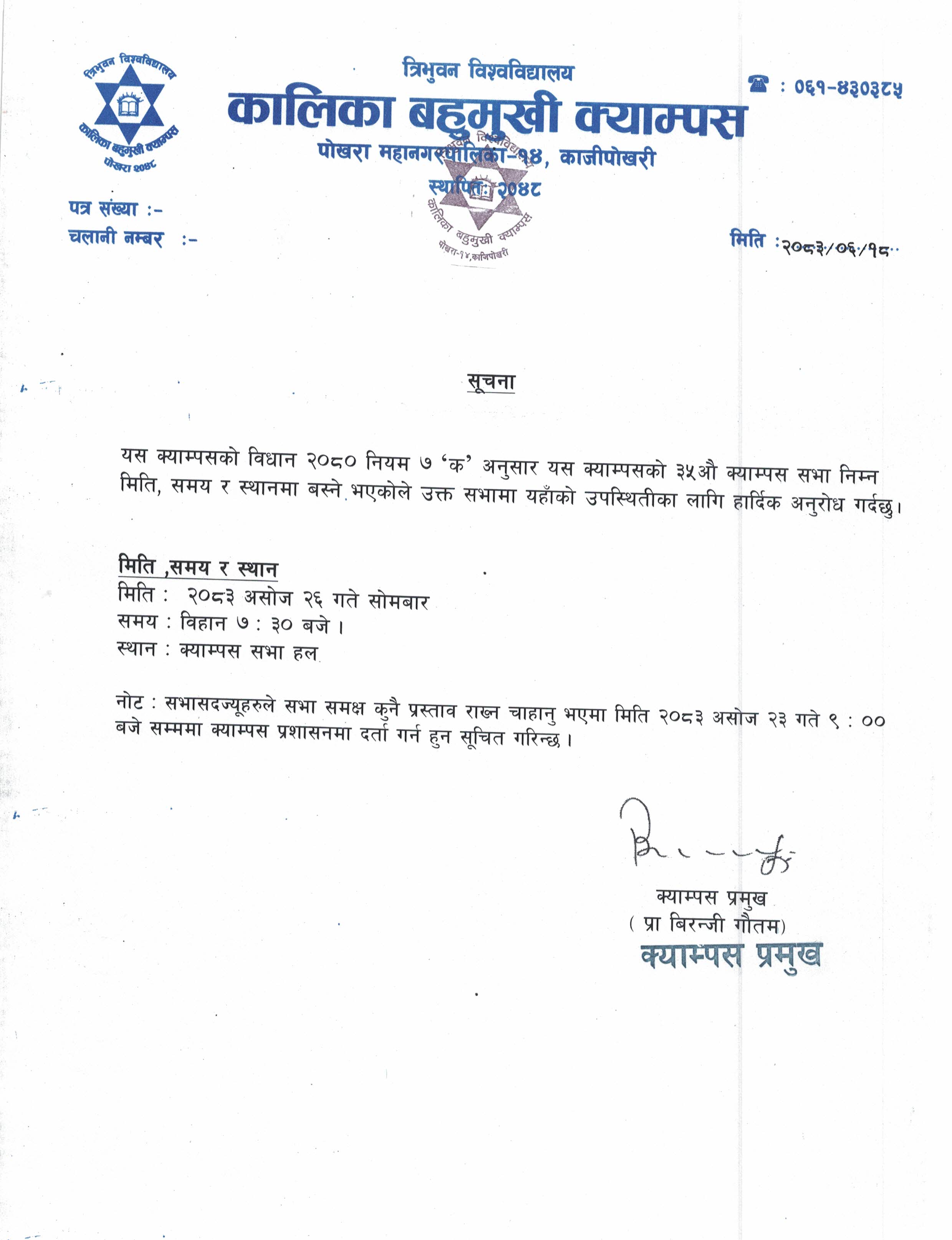
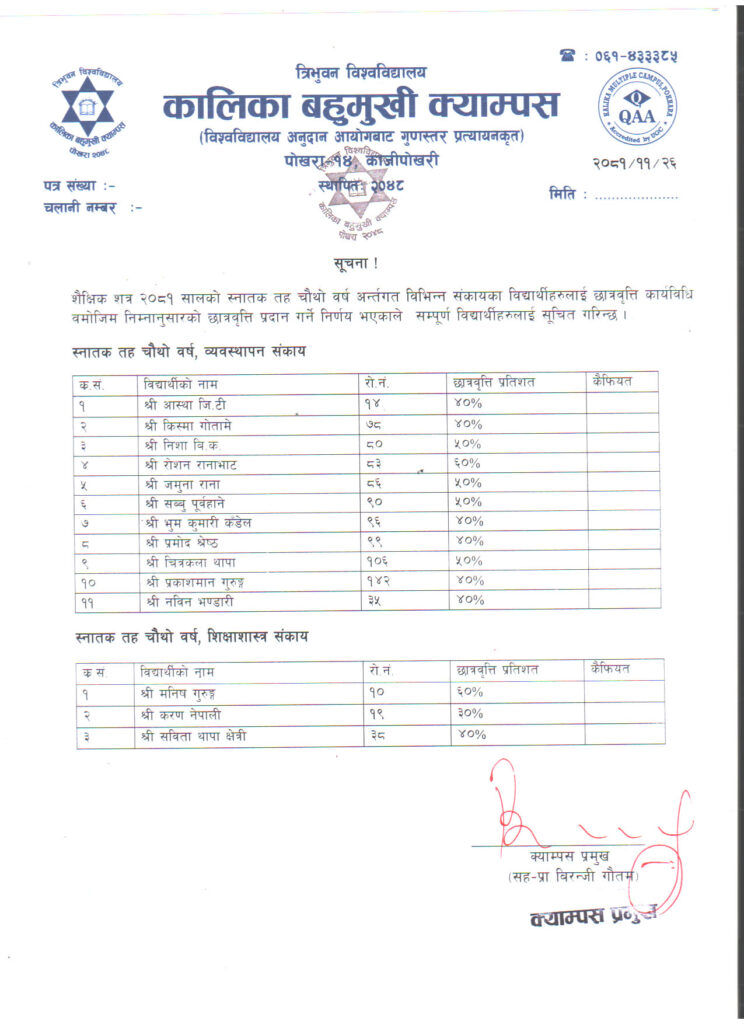
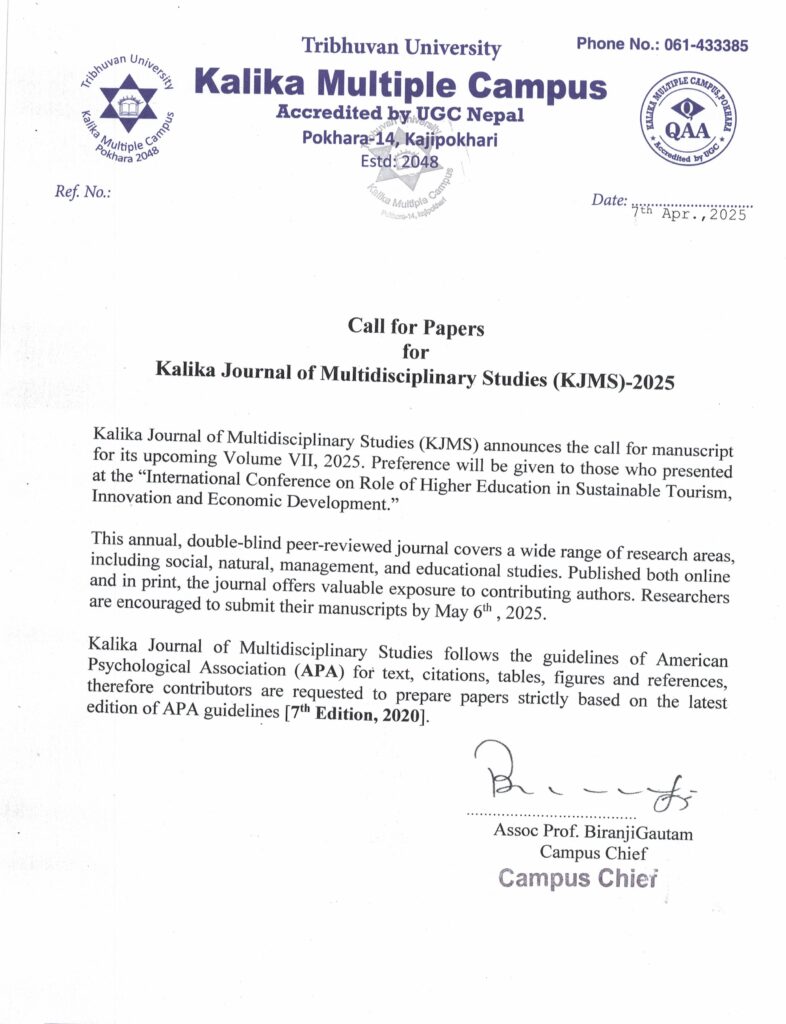
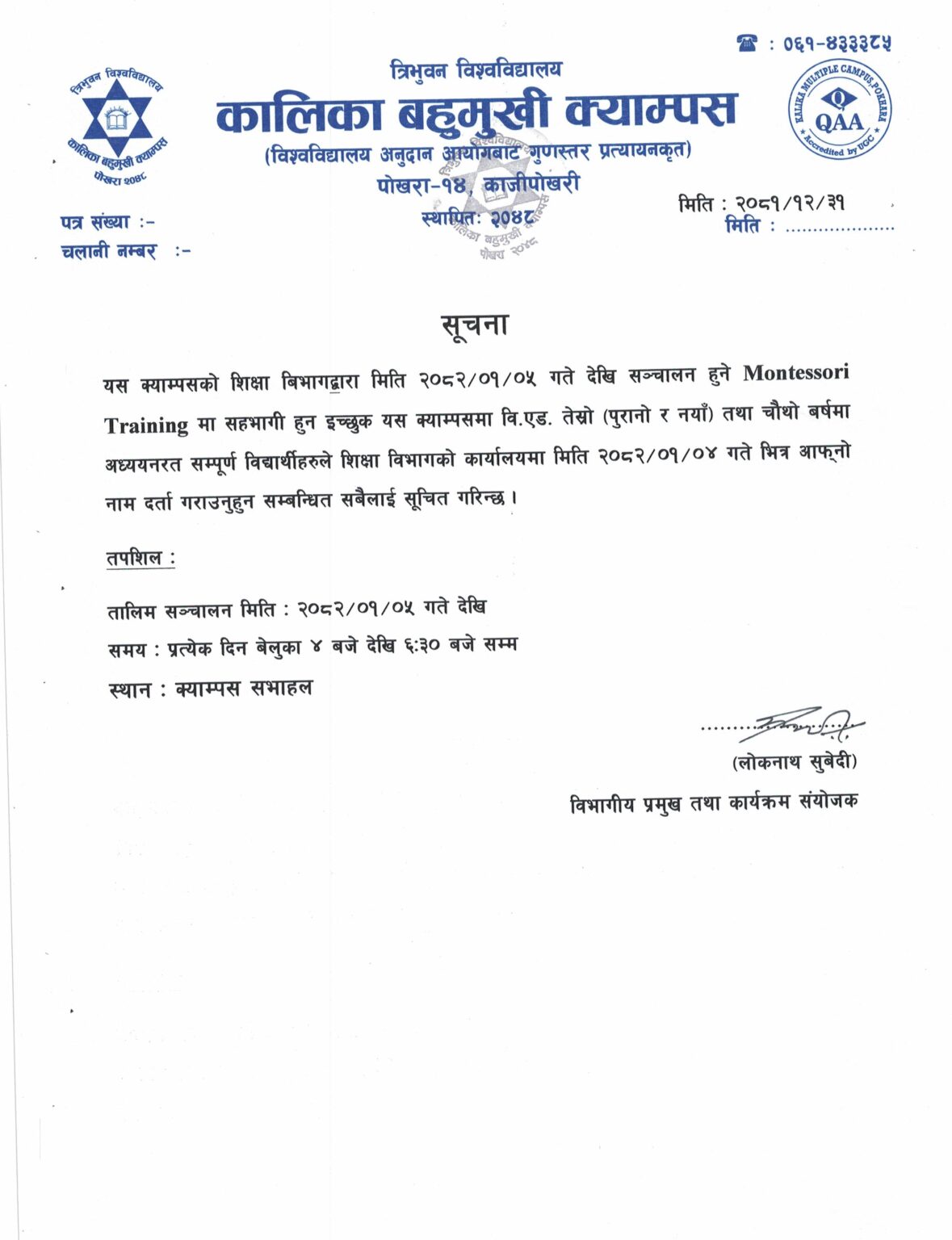
Stay updated with the latest events and activities at KMC Pokhara. Mark your calendars for these important dates.
Research Resources
Explore our research resources and tools to enhance your academic journey.
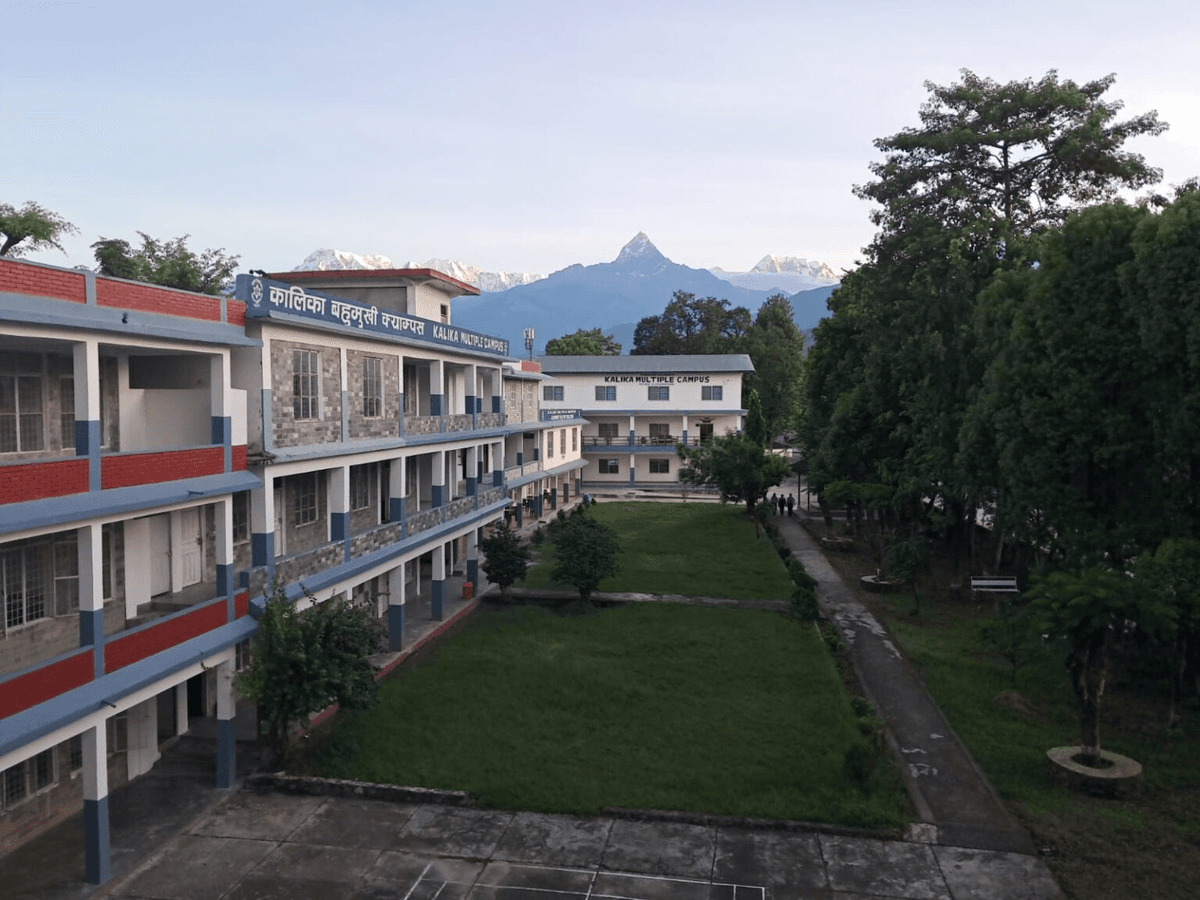
Campus Gallery
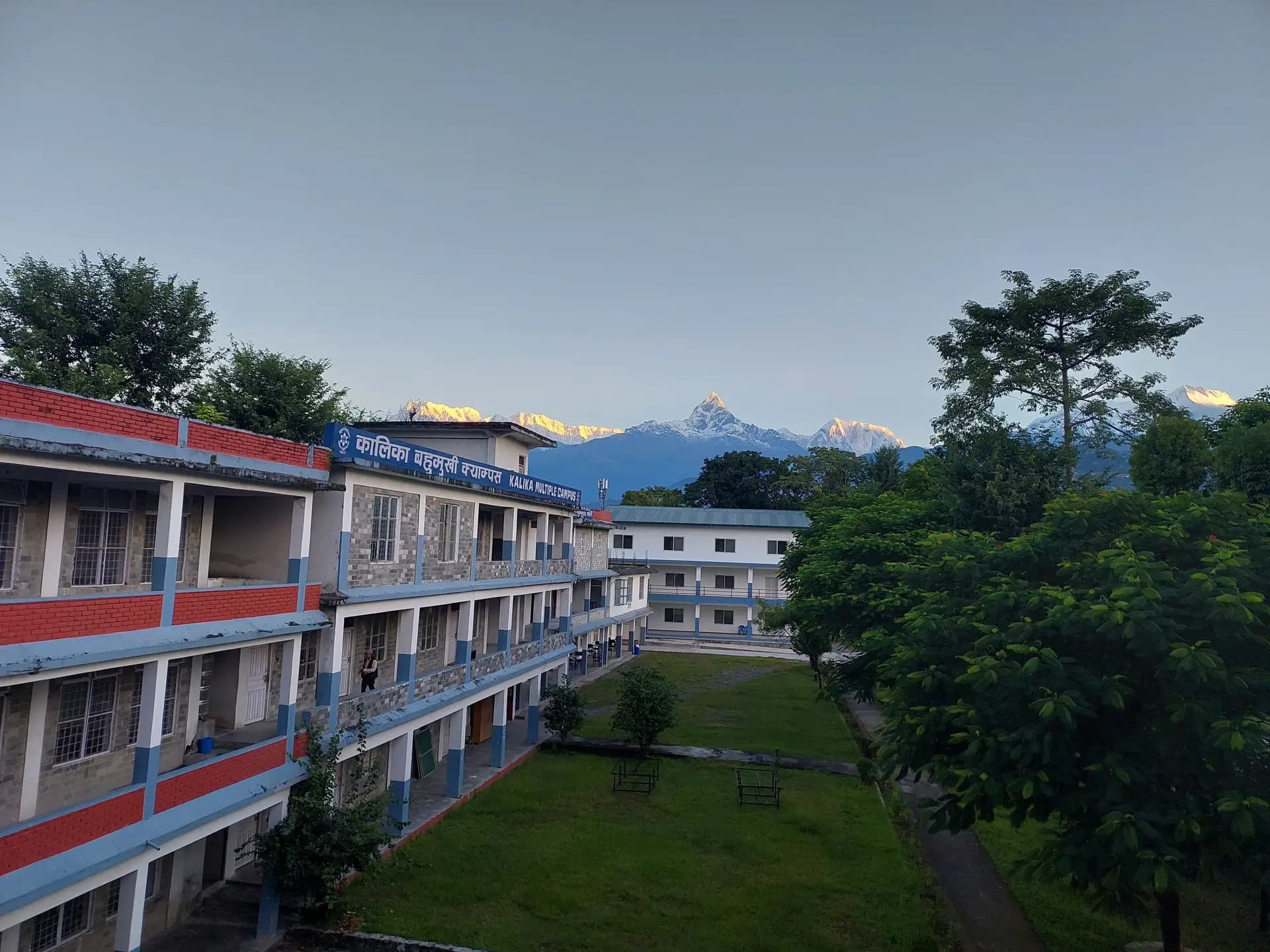
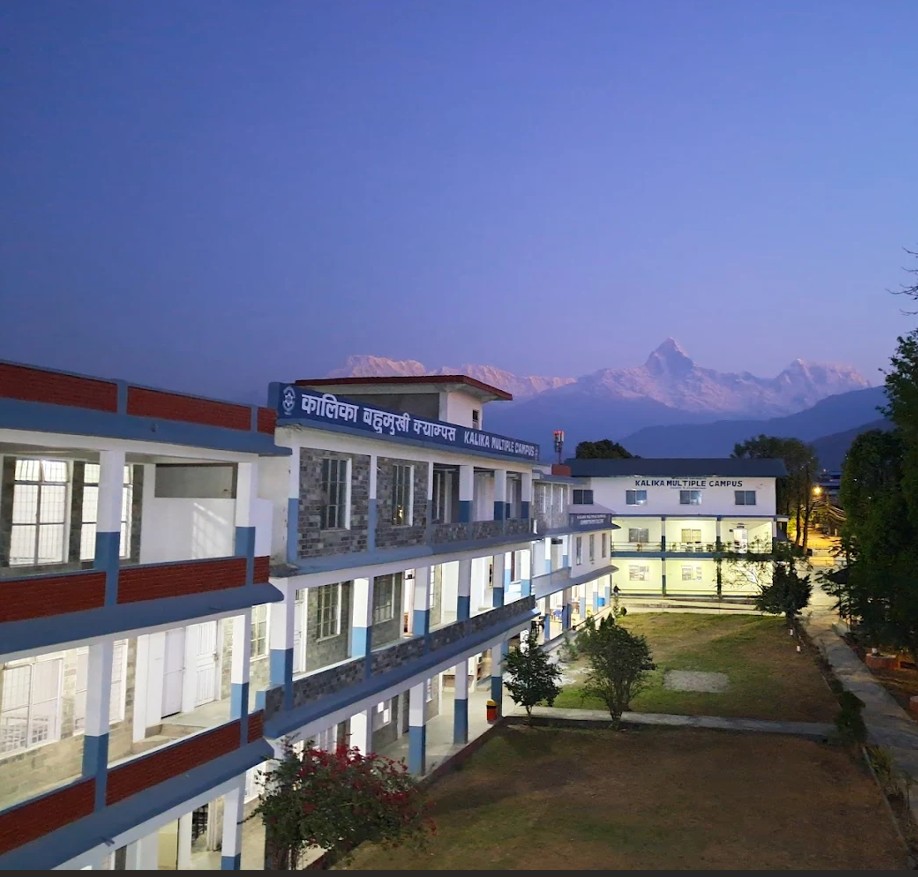
Explore our beautiful campus and discover the spaces where students learn, collaborate, and grow.
Loading gallery images...
Blogs
Latest Updates from KMC
Stay updated with the latest news, events, and activities happening at KMC Pokhara.
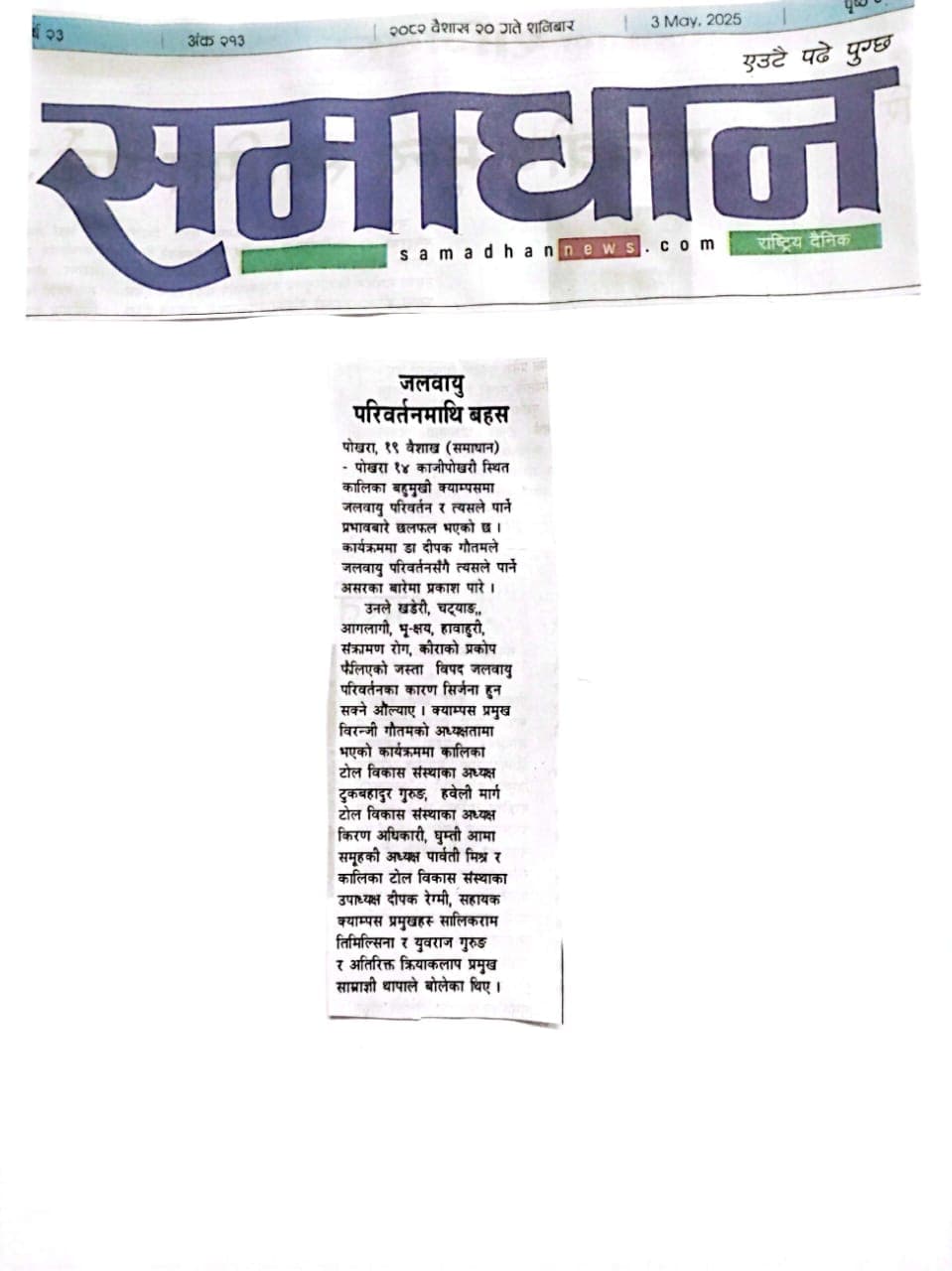
sflnsf ax'd'vL SofDk;df hnjfo' kl/jt{g / To;n] kfg]{ k|efj ;DalGw uf]li7 ;DkGg .
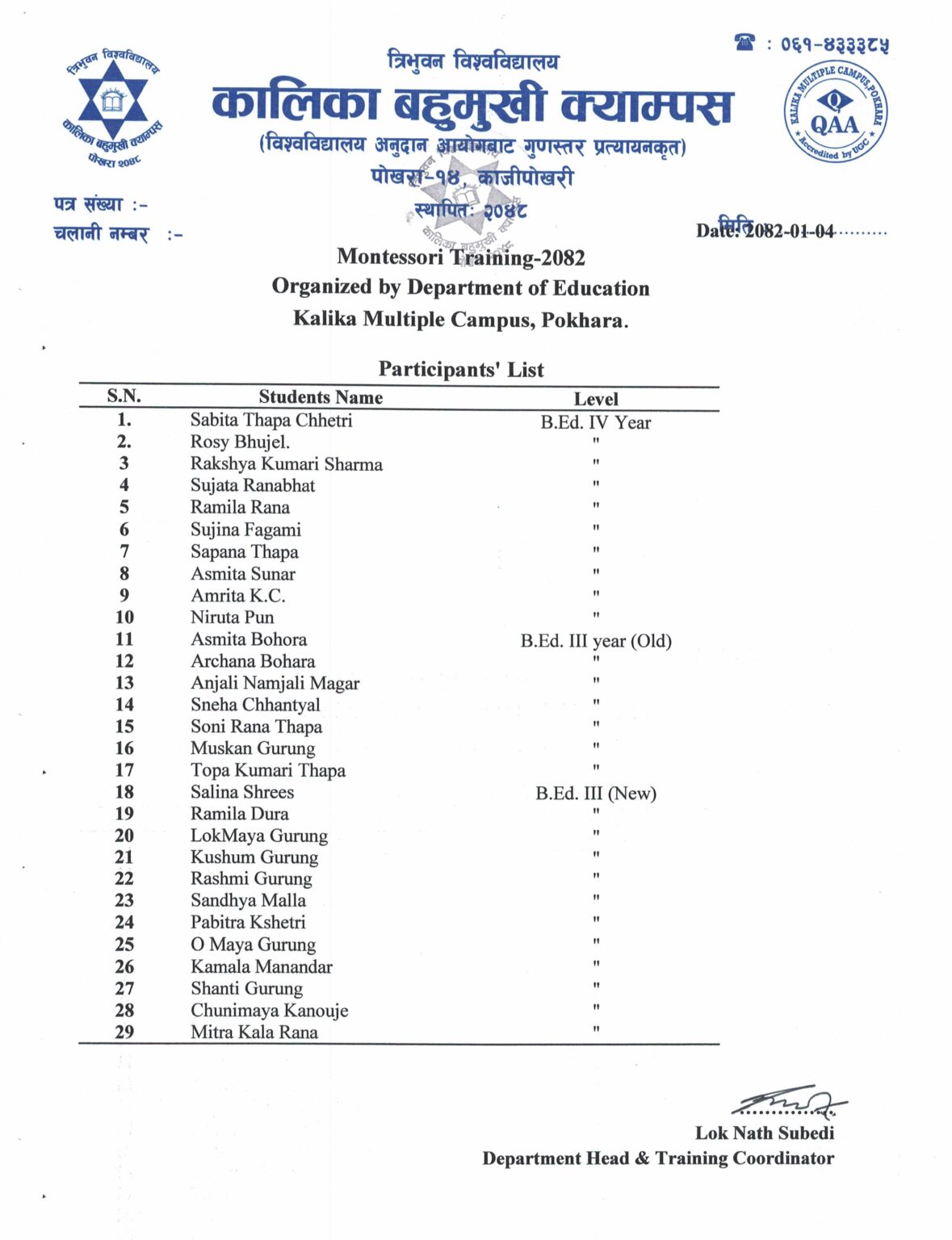
kf]v/f–!$,sfhLkf]v/L l:yt sflnsf ax'd'vL SofDk; 4f/f ;d"bfo, ljBfyL{ / cleefjs nlIft Ps lbg] hnjfo' kl/jt{g / To;n] kfg]{ k|efj ;DalGw uf]li7 SofDk; ;efxndf ;DkGg ePsf] 5 .
hnjfo' kl/jt{g ;+u} To;n] kfg]{ c;/x?sf af/]df >f]t JolQm 8f=lbks uf}tdn] ;a}eGbf a9L v8]/Lsf] ;fdgf ug'{k/]sf] atfP . r6\ofË, cfufnfuL, e"–Ifo,xfjfx'/L, ;s|d0f /f]u, ls/fsf] k|sf]k km}lnPsf] h:tf ljkbx? Aoxf]g{ afWo /x]sf] atfP . ag ljgfz, a;fO{;/fO{, ;jf/L ;fwgdf j[l4, cf}Bf]lss/0fsf sf/0f hnjfo"df k/Ljt{g cfPsf] , o;sf] cg's'ntfsf nfuL dflg;x?n] s[lif pkhdf /f;folgs dnsf] k|of]u pRr /x]sf] atfP . Pn=lk=hL Uof;sf] ;§f O{G8S;g r'nf], ljB'tLo ufl8sf] k|of]u, ?v lj?jfsf] ;+/If0f, a;fO{;/fO{df ;'wf/ u/]/ hnjfo' k/Ljt{g nfO{ yf]/} eP klg ;d'bfon] ;'wf/ ug{;Sg] atfP .
SofDk; k|d'v lj/GhL uf}td sf] cWoIftfdf ;DkGg ePsf] pQm sfo{qmddf sflnsf 6f]n ljsf; ;+:yf, e"=k" ;}lgs ;lqmo 6f]n, 3'lDt cfdf ;d'x, hfu[lt cfdf ;d'x, xj]nLdfu{ 6f]n ljsf; ;+:yf sf cWoIf , lzIfs, sd{rf/L, ljBfyL{x?sf] ;xeflutf /x]sf] lyof] . sflnsf 6f]n ljsf; ;+:yfsf cWoIf 6's jxfb'/ u'?Ë 4f/f Aofg/df x:tfIf/ u/]/ uf]li7sf] pb\3f6g u/] . pgn] hnjfo' k/Ljt{gsf af/]df ;d'bfonfO{ ;xefuL u/fO{ a'‰g] cj;/ k|bfg u/]sf]df SofDk; k/Ljf/ k|lt s[t1tf k|s6 u/] . xj]nL dfu{ 6f]n ljsf; ;+:yfsf cWoIf ls/0f clwsf/L, 3'lDt cfdf ;d'xsL cWoIf kfj{tL ld> / sflnsf 6f]nljsf; ;+:yfsf pkfWoIf lbks /]UdL n] uf]li7 ;kmntfsf] z'esfdgf JoQm u/] . SofDk; k|d'v lj/GhL uf}tdn] pkl:yt ;Dk"0f{nfO{ :jfut ub}{ hnjfo' k/Ljt{gsf] hf]lvdsf] lx;fan] g]kfn rfF}yf] :yfgdf /x]sf] jtfP . hnjfo' k/Ljt{g d'Votof dfgljo / k|fs[lts sf/0fn] x'g]x'Fbf k[YjLsf] ;'/Iff sjrsf] ?kdf /x]sf] cf]hg tx df IftL sd ug{ k|To]s gfu/Ls ;r]t /xg' kg]{ , :yfgLP lgsfP / ;d'bfo ljr ;+oGq ljsf; ug'{kg]{ atfpFb} uf]li7 sf] p2]Zo jf/] k|sfz kf/] . pkl:yt ;Dk"0f{nfO{ wGojfb lbFb} ;xfos SofDk; k|d'v ;flns/fd ltldlN;gfn] SofDk;n] cfufld lbgdf klg o:tf sfo{qmdn] lg/Gt/tf kfpg] atfP . pQm Pslbg] uf]li7sf] ;+rfng tyf df]8/]6/sf] e"ldsf ;xfos SofDk; k|d'v o'j/fh u'?Ën] u/] eg] ;dfkg clt/LQm lqmofsnfk k|d'v ;fd|f1L yfkfn] u/] .

Campus Chief Biranji Gautam argues that grade 11 and 12 should be more than a bridge to exams — it should be a foundation for higher study, nationality and entrepreneurship. In conversation, he sets out why interest must guide subject choice, why high fees do not guarantee quality, and how a community campus is quietly building a model rooted in knowledge, skill and discipline.
What should students and parents weigh when choosing a college for Plus Two?
Begin with freedom of choice. Too many students simply continue at the school where they completed earlier grades, or follow the pull of friends, parents and advertisements. That cannot be the main basis. A college should be chosen only after a student has understood their own interest, learning style, goals and confidence.
We also need to retire two myths. The first is that one particular institution can guarantee success — no institution can, and we should stop telling students otherwise. The second is that quality tracks fees. It does not. Many affordable schools and community campuses offer strong teaching, discipline and facilities. What students should actually look for is a supportive environment, experienced teachers, respect for practical knowledge and a culture of discipline. Visit the campus. Talk to seniors. Compare facilities. Ask whether the institution treats your voice as worth hearing. The right college is one where a student feels safe, inspired and willing to work hard every day.
How should a student approach subject selection in grade 11?
Interest and ability should lead — never fashion or family pressure. The current grade 11 and 12 curriculum is flexible by design: science, management, education, humanities and other streams are open to students according to their capacity. That flexibility is a real opportunity, but it has to be used with care. A student who picks a subject without genuine interest will struggle, fall behind, and sometimes lose an entire academic year.
This is why pre-admission counselling matters. Campuses should review a student's SEE performance, earlier strengths, study habits and ambitions before recommending a stream. And no faculty should be ranked as superior or inferior. Science, management, education and humanities all become meaningful when the learner takes them seriously and connects them to real opportunity.
Once the choice is made, how should a campus prove it delivers quality?
Through visible work, not promises. Proper classrooms, functional laboratories, furniture, learning materials and a clean academic environment are the baseline. Beyond that, you need experienced teachers, regular classes, counselling, discipline and a culture where students feel free to ask questions. Parents and students can — and should — observe whether classes actually run, whether teachers are sincere, and whether the institution prepares learners for life beyond exams.
At Kalika, we treat grade 11 and 12 as a foundation for both higher education and citizenship. That means combining theoretical knowledge with practical skill, confidence, ethical behaviour and social responsibility. Classroom teaching must be reinforced by evaluation, feedback, library use, project work and laboratory practice. Quality is not a single achievement; it is a continuous process in which students, teachers and administrators all remain accountable.
Since you took over, Kalika has strengthened its profile and entered the QAA-certified framework. What is driving this push?
Identity. Kalika is a community campus and a non-profit institution, and that matters. Our management committee, teachers, staff, parents and the surrounding community work together for student welfare. When a problem appears, the management committee moves quickly and arranges the resources we need.
Our teachers, too, do not treat teaching as merely a job. They guide students as they would their own children — counselling, motivating, correcting course. This collective spirit existed before my time and has only deepened since. The QAA process has reinforced it by pushing us to document our work, improve systems and make every unit more transparent and student-centred.
What does the campus look like today, in terms of programmes and student numbers?
Plus Two runs in the day shift under a separate coordination system, including a coordinator and assistant campus chief, because the level has autonomous administrative status. Around 600 students are enrolled across grades 11 and 12, with classes, laboratories, furniture, supervision and discipline arranged to let them study seriously.
At the higher levels, roughly 1,500 students are pursuing bachelor's programmes, and around 125 are at master's level. We offer MBS and MARD — and we remain the only campus in this region running MARD. Proposals are also in place for more market-oriented programmes including BBA, BHM and BIT.
Our guiding principle is access with quality. Students from ordinary families should not have to settle for less than what expensive institutions provide. That commitment matters most for learners outside the major cities.
Your closing message to students, parents and the community?
Kalika Multiple Campus is working to build an educated, aware and self-reliant society. We do not want our graduates leaving here unemployed or uncertain about what comes next. That is why we have established an incubation centre and are linking students to entrepreneurship, and our non-credit courses and trainings sit alongside the regular curriculum.
The idea at the centre of everything we do is simple: bring together knowledge, skill and discipline. When those three move together, students are equipped not just to pass examinations but to contribute to their families, communities and the nation. That is the mission of Kalika Campus.
TESTIMONIALS
What Our Students Say
Hear from our students and alumni about their experiences at KMC Pokhara.
"FACULTY: MANAGEMENT LEVEL: BACHELOR 3RD YEAR I realize a college choice is a serious decision for every student in their life but I am satisfied that I have taken the right decision by joining KMC. Some students go miles away seeking quality education but I recommend all students to join KMC. Some facilities include charming scholarships, highly qualified teachers, affordable fees, multimedia-supported teaching, a well-equipped library, a hygienic canteen, extracurricular activities, and many more."
POOJA GURUNG
ACTIVE
"FACULTY: EDUCATION LEVEL: BED 2ND YEAR My impression about KMC is that its environment is quite suitable for the academic endeavor. It has been delivering quality education at an affordable fee. All professors and lecturers are well experienced, friendly, inspiring, and encouraging. I have seen radical progress in administration, physical infrastructures development, and delivery of quality education. I see a bright future for this campus. I am very grateful and privileged to study here and also recommend all students seeking quality education."
PREM TAMANG
ACTIVE
"FACULTY: HUMANITIES LEVEL: B A 1ST YEAR I appreciate that the classes at our campus have been running smoothly. Students take pride in the dress code and it would be better if all the members of the campus families wear formal dress. There was an urgent need for our campus website and I am happy to hear that the website is under construction now. I hope urgent notices such as exam routine, board/university exam center, etc. will be displayed on the website, and thus, students can remain updated from anywhere, anytime."
PRAMILA BARAL
ACTIVE
"FACULTY: MANAGEMENT LEVEL: BBS II YEAR I am glad to see some strong initiatives for QAA Certification by our campus. QAA accreditation is necessary for every Higher Educational Institution in Nepal because it enables the campus to promote its overall quality to meet global standards. We are happy to be part of various campus committees that work for campus reform. Let’s work hand in hand to make the QAA mission a success. Highly recommended for all students seeking quality education."
SUJANA ROKA
ACTIVE
"FACULTY: EDUCATION LEVEL: BED II YEAR A few years ago, there was a practice of using blackboards and chalk on our campus but in the last three years, they were replaced by whiteboards and markers. But this year, the campus started the practice of using multimedia in class, and students are also encouraged to participate in interactive learning. If lecturers are supported by multimedia, they become very interesting and effective.” This type of practice is needed to get rid of rote learning-based teaching."
SHER BDR KHATRI
ACTIVE
CONTACT US
Get in Touch
Have questions about admissions or programs? We're here to help. Reach out to us using the contact information below or fill out the form.